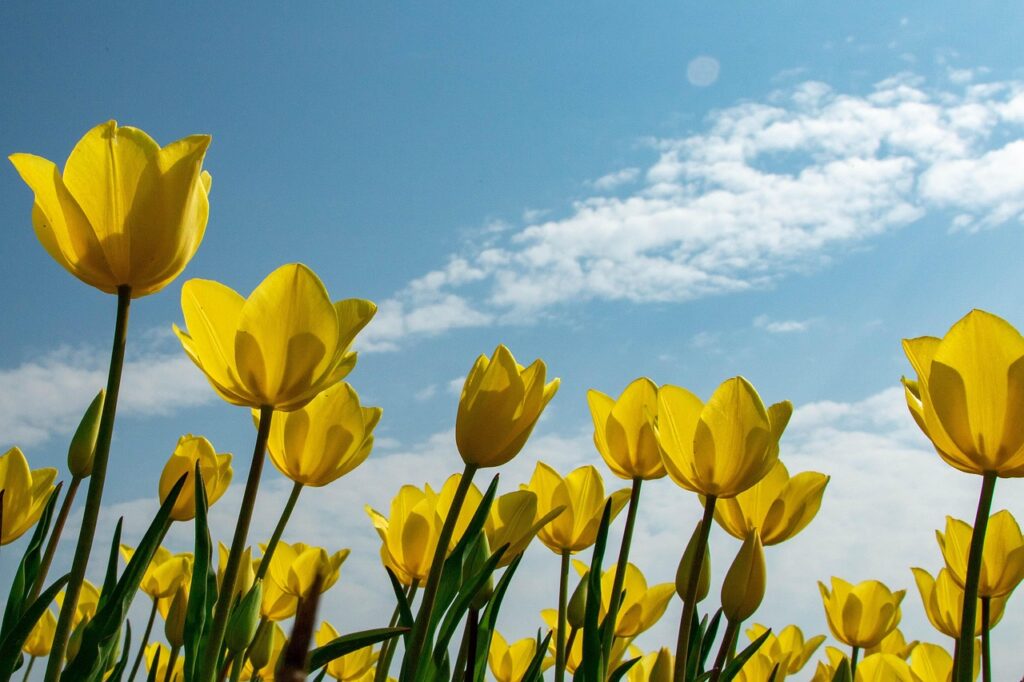
Tulips mark spring’s arrival, celebrated for elegant, elongated stems and vibrant, cup-shaped blooms in nearly every color of the rainbow. In bouquets, tulips provide linear, upward-reaching visual interest that breaks up compact arrangements. Their stems are flexible yet sturdy, preventing sagging when properly hydrated.
Tulips come in single stems and “double” varieties with more layered petals. In arrangements, they can fill space or serve as accents to focal flowers, their graceful verticality creating movement. Symbolically, tulips carry layered meanings: red tulips traditionally express deep, romantic love, while yellow tulips signify cheerful wishes and friendship—though yellow can also suggest cheerful, sunny warmth rather than negative connotations in some contexts. Purple tulips represent royalty, while pink symbolizes elegance and grace. Orange and red tulips convey passion and courage. In the Dutch cultural tradition, tulips hold special significance dating from the 1600s bulb trade, where they briefly became more valuable than gold. Their spring seasonality—peaking February through April—makes them perfect for spring celebrations like Easter, birthdays, and Mother’s Day. Tulips are commercially grown year-round in greenhouses, though peak season blooms are most reliable. Their longevity is moderate (1-2 weeks) but acceptable when properly cared for after purchase. They pair beautifully with roses, carnations, lilies, and ranunculus. Tulips prefer cooler climates and can suffer in heat, making them ideal for spring and early fall bouquets rather than summer arrangements. Their simple, classic appearance makes them suitable for both rustic garden-style bouquets and minimalist, modern arrangements. Tulips are also popular for forcing indoors during colder months when purchased as bulbs, allowing homeowners to watch flowers bloom from home-grown sources before they arrive commercially. Their availability and symbolic versatility—from expressing love to marking seasonal transitions—ensure tulips remain perennial favorites in floral design and commercial markets worldwide.